


Benson Muchina: Ex hockey player who single handedly overcame depression to run a hardware





Reading Time: 5min | Tue. 29.04.25. | 18:40
Today, the former Daikyo Heroes Hockey Club player speaks openly not about goals scored or titles won but about mental health, recovery, and reclaiming his life from a broken system
Benson Muchina’s story was supposed to be one of athletic triumph, a talented hockey player rising through Kenya’s grassroots, chasing dreams one goal at a time.
Follow our WhatsApp channel for more news
Instead, it became a battle far deeper than any game could offer; a fight for his mind, his dignity, and ultimately, his purpose.
Today, the former Daikyo Heroes Hockey Club player speaks openly not about goals scored or titles won but about mental health, recovery, and reclaiming his life from a broken system.
.jpg)
Born and raised in Eldoret, Muchina’s hockey journey began at St. Anthony’s Boys High School, Kitale, a hotbed of sports talent. Hockey gave him identity and hope in a country where sporting excellence or academic brilliance were often the only tickets to a better life.
After high school, Muchina joined the National Youth Service (NYS), undergoing paramilitary training and national-building programs, while also studying Building and Construction.
But life had other plans. A failed university entrance pass mark in 2016 shattered the dream of securing a scholarship. It was not just disappointment, it was the beginning of a downward spiral.
"Coming from an environment where only education or sports could help me be the best I could, this became stressful for me," recalls Muchina. "I felt the pressure of disappointing my parents. I didn’t know what was next."
As the weight of failure bore down, Muchina began experiencing mental health challenges. His family struggled to understand, often attributing his struggles to drug use.
"My parents were the ones taking me to the hospital, but saying it's because I was smoking bhang," he says. "I was given injections, put on antidepressants...but nothing really healed the root problem."
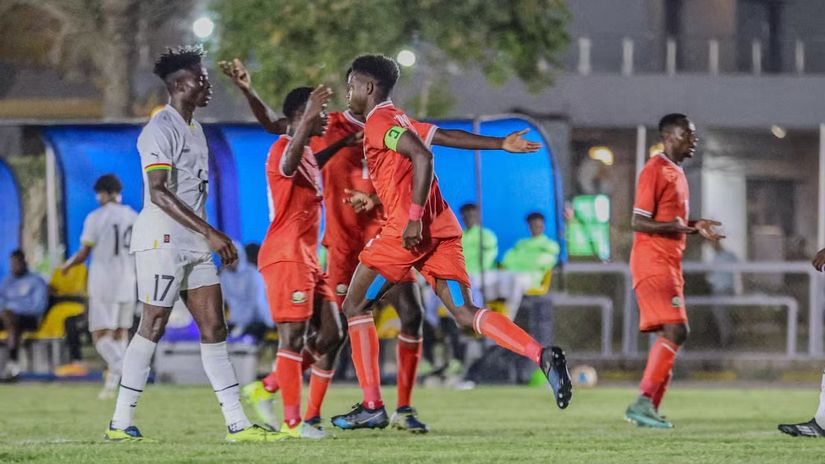
What followed were years of hospitalisations at Port Reitz Hospital in Mombasa, Mathari National Teaching and Referral Hospital in Nairobi, and Moi Teaching and Referral Hospital in Eldoret. The cycle was exhausting, in and out of wards, endless medications, but no clarity.
It was only in 2022, after years of turmoil, that Benson received a formal diagnosis: bipolar disorder. He was admitted to the Nawiri Recovery and Skills Centre in Eldoret for rehabilitation.
Yet even with a label, answers were hard to find.
A Hockey Comeback and a Final Break
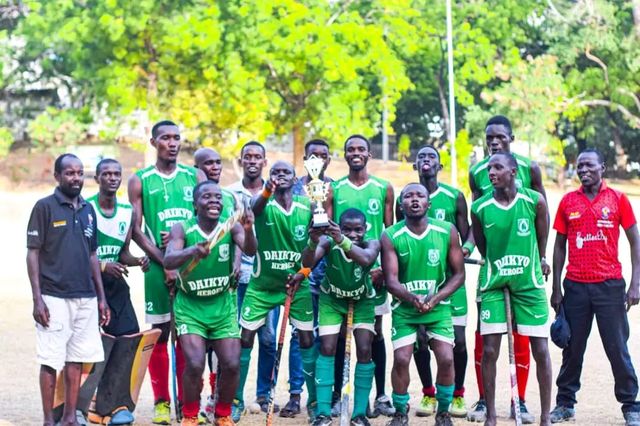
Through the storms, he returned to the pitch. In 2021, he played for Daikyo Heroes Hockey Club, one of the first players to don their jersey after their 2020 formation.
He briefly tried out for United States International University-Africa (USIU-A) but returned to Daikyo and was a member of the squad that won the Kenya Hockey Union (KHU) National League title.

It was a fleeting moment of joy.
"That was the last time I played competitive hockey," he says quietly.
Behind the scenes, mental health challenges lingered, worsened by the side effects of psychiatric medication that dulled his sharpness, sapped his energy, and clouded his mind.
Muchina’s Own Words: The True Pain Behind the Pills
Speaking not from encyclopaedias but from raw lived experience, Muchina lays bare the painful reality of mental health treatment in Kenya.
"Before the pills came, the label: BIPOLAR DISORDER. No brain scan, no blood work. Just a few questions, and that's all it took to redefine me clinically," he says. "My life was reduced to a convenient and permanent diagnosis."
In rehabilitation centres, he says, there was no healing, only indoctrination.
"We weren't being healed. We were being moulded to fit the system’s idea of what mentally ill should look like," he says. "No one asked what had happened to me but only what was wrong with me."
“They first numbed my thoughts. The second blew up my weight massively. The third pulled me into a fog. The fourth drained every ounce of energy I had left to a point my bedroom language was no more," he narrates.
When he resisted or broke down, he was thrown into the "strong room" - a punishment cell masked as a procedure. "No light. No voice. Just punishment."
"Alive but never living," Muchina says. "Lost years. Not because of illness, but because of the treatment."
Seven Months to Freedom: Rebuilding a Life
.jpg)
In late 2024, he made a fateful decision: he walked away from psychiatric medication and formal treatment altogether.
"No more pills. No more appointments. No more being told who I am by people who never asked," he says.
It was not a reckless move, an act of survival. He returned to the gym, shed the excess weight, fought back against the mental fog, and started hearing his own thoughts again.
Today, he runs a small hardware shop in Eldoret and trains neighbourhood children in hockey, striving to give them a healthier path forward, one stick and ball at a time. His biggest challenge now is raising funds to buy proper hockey equipment for the kids.
A Voice for the Silenced
Muchina now speaks out not because he is trapped in the past, but because it has reshaped his purpose.
"I'm not telling others to quit their meds. I'm not here to play doctor," he emphasises. "I'm here to say your system isn't healing people, it's managing them, and often doing more harm than good."
He urges the mental health system to listen before prescribing, to collaborate rather than control, and to respect the lived experiences of patients.
"You study trauma. We live it. You treat disorders. We carry the weight of those labels every single day," he says. "Until you work with us, not on us, you will never truly help us."
He credits the few genuine healthcare workers who treated him with dignity, including Dr. Kwooba, for reminding him that healing must come from humanity, not just protocol.
Advice to Young Athletes:
From his hard-earned wisdom, Benson offers this to sportsmen and women:
.jpg)
"Use your prime well. Avoid drugs if not necessary. When you are at your peak, know it's the most delicate moment of your life, you can break easily or become a figure of inspiration," he says.
"Depression often comes when everyone steps away, and you are all alone. That loneliness can bring 'pills'."
Muchina’s journey is not a tragedy, it’s a triumph of spirit. A story of a man who refused to be erased. A man who reminds us that healing is not about sedation, it’s about being seen.
"I am not your subject. I'm your case study. I lived through it with my mind intact," he says.
In his voice, raw and unflinching, Muchina carries not just his own story, but the silent stories of thousands yet to be heard.